A mystery in the recordings: The evening we met the common nighthawk
A mystery in the recordings: The evening we met the common nighthawk
WRITTEN BY SHRADDHABEN VADGAMA
Some field stories begin with a unique encounter in the forest. Others begin with people wearing headphones huddled around a laptop, gazing intensely at spectrogram images like they are one millisecond away from revealing a secret message from the universe. That’s how this story began.
This summer, our Stewardship team placed Autonomous Recording Units (ARUs) at 10 of our nature preserves. These units capture full audio soundscapes, from the rustle of leaves, frog calls, wind, raindrops, bird chorus, and even the odd midnight squirrel with opinions.
One rainy day, as our team was sipping coffee and listening to hours upon hours of audio recordings until our ears got tired, something unexpected called out.
“PEENT!”
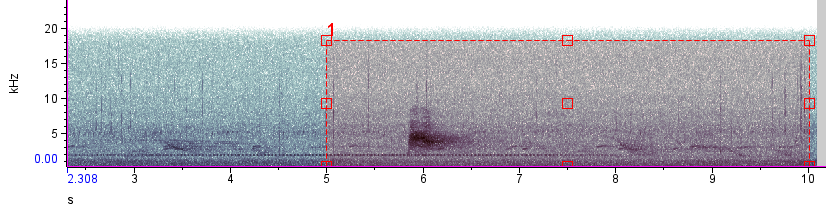
Spectrogram image of a common nighthawk call
As if someone had flicked a pebble of sound directly at the microphone.
Alicia paused. Rachel rewound the recording. As we played the sound again and zoomed in on the spectrogram, there it was.
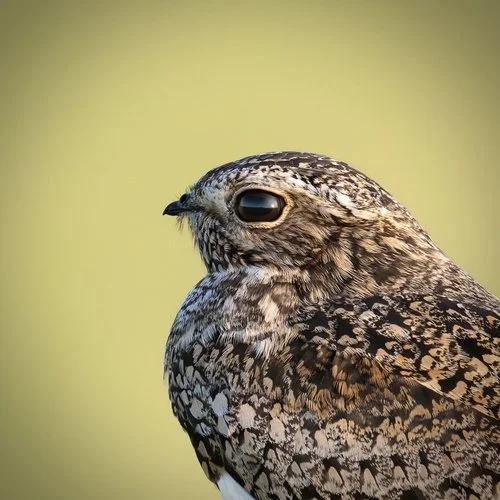
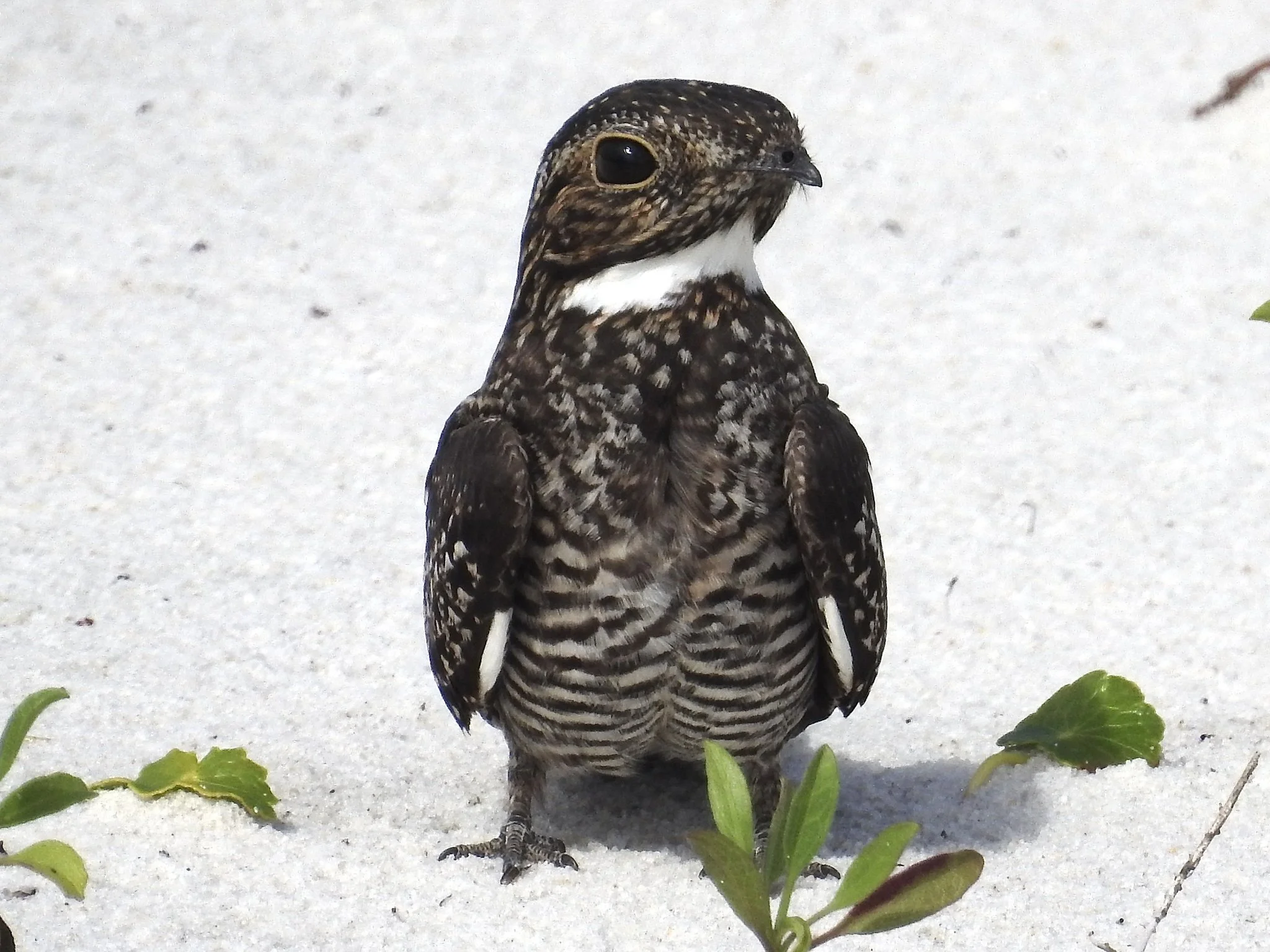
The common nighthawk (Chordeiles minor), announcing itself unapologetically into our ARU.
The bird we heard before we ever saw it!
Despite its name, the common nighthawk is not a hawk, nor is it truly a night bird. In fact, this bird prefers to fly at dusk and dawn, when light is either fading or bleeding into the sky and the details of the horizon go soft at the edges.
In Wolastoqey stories, birds like the common nighthawk exist between day and night. Active during the in-between hours of dusk and dawn, they are messengers across different parts of life, reminding us that the day is ending, that it’s time to return home.

Stewardship Coordinator Shraddhaben Vadgama listening to ARU data at her desk — when nature speaks, she listens.
With its long, angular wings, the common nighthawk is one of nature’s most attractive aerial foragers, with a remarkable ability to catch flying insects mid air.
Because the common nighthawk camouflages into the landscape and flies under the cover of dusk, you rarely ever see it clearly, but you know it’s there if you hear that distinctive “peent!”
Like nature itself, it’s both familiar and mysterious, holding history, memory, and life even when it seems silent.
Why it matters
Sadly, the common nighthawk is declining across North America due to habitat loss and is listed as threatened under the Species at Risk Act (SARA) and special concern by COSEWIC. In New Brunswick, this bird is officially classified as an S2B or threatened species, making every confirmed vocalization not just a sound, but an ecological signal that immediate protection of the habitat where it was found is needed.
Common nighthawks depend on open vegetated habitats like gravel beaches, forest clearings, and dunes, all in decline in New Brunswick due to urban development. Rapid decline of insect populations driven by climate change and heavy use of pesticides are additional pressures on this species.
So, when our ARU captured a single ’peent,' it was confirmation that our nature preserve offers ideal habitat for this declining species. It’s a reminder that the preserve isn’t just a part of the landscape, it’s actively telling a story and supporting biodiversity that is under real pressure elsewhere. It means we’re doing something right by preserving this space and maintaining its ecological integrity.
That’s what stewardship and land care truly is: not just walking trails or planting trees, but listening to every bird call and letting the forest speak on its own terms.
Heroes with headphones: the ARU whisperers who care for the land
Behind every moment like this is a team quietly doing outstanding work with heart, passion, and a deep love for nature.
This recording of the common nighthawk is part of the Nature Trust’s soundscape project, led by myself, Shraddhaben Vadgama, overseeing the deployment, monitoring, and analysis of acoustic recorders across our preserves. Our stewardship team, Grace Maclean, Molly Rees, Payten McCann, and Ben Horst, supported deployment of ARUs to our nature preserves.
With guidance and support from Courtney le Roux, the Nature Trust’s Stewardship Manager, this project is helping us better understand how wildlife uses our protected landscapes in places where sightings are rare and year-round access is difficult.
And then, of course, there are heroes with headphones. Alicia Higney and Rachael Moran are our ARU whisperers who have dedicated hours upon hours listening to, reviewing, and verifying audio recordings in the hopes of finding rare species or uncovering mysteries like diamonds in the rough.
It is through their persistence, their attention to even the faintest of whispers, that our nature preserves and the species that call them home are able to tell their stories.
Nature speaks. We listen.
Want to help listen to the next mystery?
We’re always looking for volunteers, bird enthusiasts, and curious nature nerds to join us in going through ARU audio recordings to help identify species.
Whether you’re experienced with bird calls or just want to learn, your ears could help make the next big discovery!
Interested? Reach out to our Stewardship team at steward@ntnb.org to learn how you can get involved.
Click here to learn more about our ARU Soundscape project.
This work is possible thanks to our donors and volunteers, and support from RBC Tech for Nature, RBC Net Zero Economy, McLean Foundation, Sir James Dunn Foundation, Echo Foundation, William P. Wharton Trust, and Wildlife Habitat Canada.