The summer I fell in love with nature
The summer I fell in love with nature
Suzanne Shah reflects on how the stillness of the woods helped her to stop, breathe, and appreciate life in moments
WRITTEN BY SUZANNE SHAH, COMMUNICATIONS INTERN
The evening felt quiet in a way I had never noticed before. Light pooled low over the pond beside the trees, and the water held the last shape of the day. My breath matched the stillness without effort. For a moment, everything around me moved at one pace—slow, steady, unhurried—as if the woods were breathing with me. The air smelled of spruce and river water. Something in that quiet softened the noise in my mind, though I didn’t understand it then.
I hadn’t come to this place searching for anything. A few days earlier, my thoughts had been tangled and restless, heavy in a way I couldn’t explain. When I stepped onto this path, I expected nothing from the woods. I didn’t know this quiet would stay with me—or that somewhere between water and fading light, I would learn how to pay attention.
But that evening wasn’t where the story began.
It was the moment the change became visible—after weeks of walking into the woods without knowing why they mattered.
When summer 2025 started, I already lived in Fredericton as a student. I applied to the Nature Trust of New Brunswick for a general internship—curious more than confident. I study journalism and communications, and I thought the role would look familiar: writing stories, talking to people, learning how to communicate mission and meaning. What I found was something I hadn’t been looking for and didn’t know I needed.
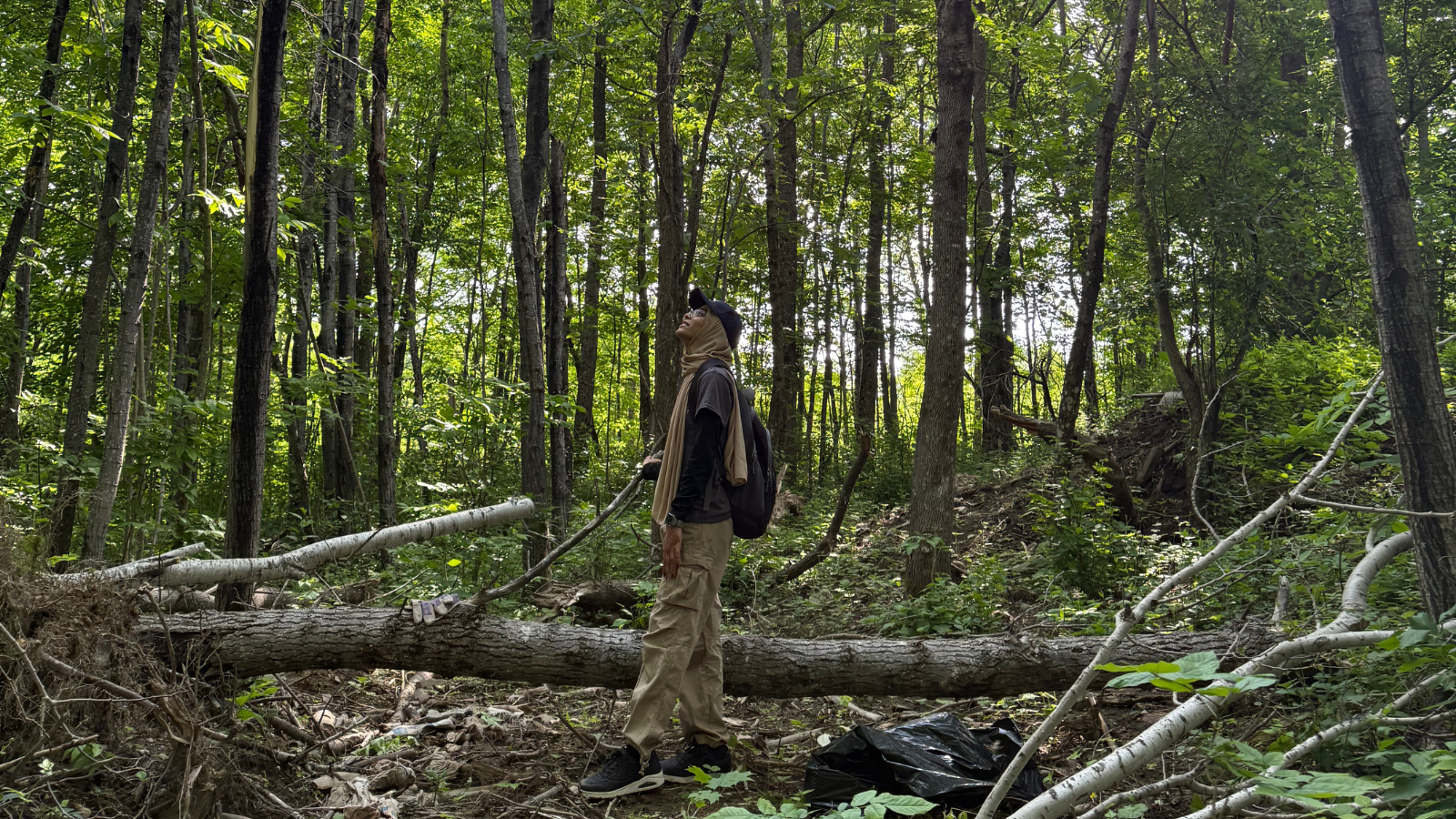
Somewhere between mud and trees, it started to feel familiar. (Credit: Gabriella Mascarenhas /Nature Trust of New Brunswick)
I come from Hyderabad, a busy, bustling city of around 10 million in southern India where days move fast and streets hold more sound than silence. Nature was part of everyday life, just not something I walked into with intention. Trees grew past balcony lines, my mother’s garden filled our yard with colour, and summer rain arrived all at once, washing the dust from everything. The city sits beside the Musi River and is dotted with ancient artificial lakes, but my connection to water was often from a distance—a glimpse through a car window. Nature wasn’t foreign to me; I just didn’t yet understand the difference between seeing it and paying attention to it.
On my first morning in the office of Nature Trust of New Brunswick, two dogs walked around the meeting table while we looked at maps for fieldwork. Shane, a tall white dog with calm eyes and thick fur, leaned his weight against peoples’ legs as if he had always belonged in meetings. Tater Tot, small and cheerful with a pink-dyed tail, climbed into empty chairs like a regular staffer. I wasn’t used to dogs being part of a workday, and my stiff posture probably made that obvious. I had arrived expecting a notebook and a desk. Instead, the job was already pulling me out of my comfort zone.
The Nature Trust of New Brunswick protects the places that hold the province together—valleys where rivers slow, islands shaped by tides, and quiet stretches of Wabanaki/Acadian forest that have grown here for centuries. Today, the organization stewards 98 nature preserves across the province, caring for them through research, restoration, stewardship work and long-term protection. Some preserves feel wild and far from any road; others sit just beyond a city edge, close enough that anyone can step off pavement and into trees.
Ferris Street was the first one I walked into.
Ferris Street Forest and Wetland Nature Preserve sits on the north side of Fredericton, a little farther from student apartments than you expect. The drive is long enough to understand the scale of the province—forest unfolding past the edge of the city. We went out for stewardship work: removing invasive species, checking trail markers, learning what 'protecting land' looks like when you’re standing among the trees.
My rubber boots sank into mud before I took a second step. The air smelled like wet soil and leaves breaking down into the ground. Branches closed around the group as we moved forward, everyone calling out tree species and erosion patterns like a language I hadn’t learned yet. I stayed behind, walking slowly, trying not to show how uneasy I felt with a dog moving confidently ahead of us. Everything was beautiful, but I couldn’t feel beauty yet. My mind was still full of warnings and discomfort.
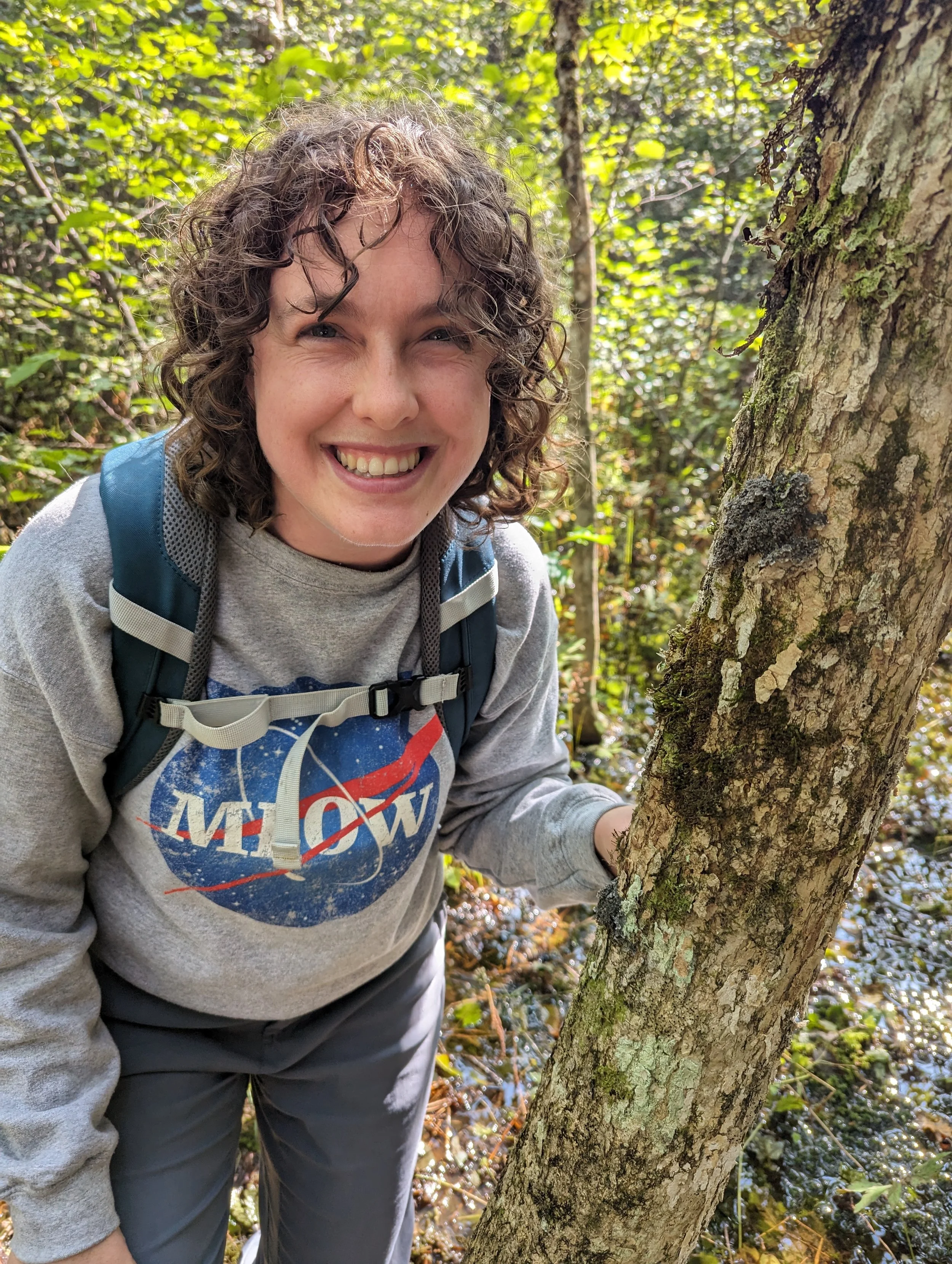
Ilana Urquhart, one of the Nature Trust’s dedicated conservation coordinators and resident rare lichen enthusiast!
When we reached the wetland, the forest opened into a calm patch of light. The water was flat except for a trail of ripples behind a line of geese. On the far bank sat a beaver lodge—crooked and deliberate, built from what the land offered. I lifted my phone and took a picture without thinking about it as a moment. I just wanted to keep something from the day.
Ilana, a conservation coordinator, walked beside me.
“You’re doing alright back here?” she asked.
I nodded, though I wasn’t sure.
“It grows on you,” she said. “Give it time.”
At the time, it sounded like reassurance. Later, I would understand it as truth.
A few weeks later, we went out for boundary training at a preserve near the Nashwaak River Dam. The heat surprised me. In Hyderabad, summer temperatures climb past 43°C, but heat rarely reached me directly. Life moved between shade, cars, short walks, and rooms. Heat happened around me—not to me.
Here, we walked in it.
We moved slowly through the brush, marking the boundary of the preserve. The air felt thick enough to hold its own weight. Branches pulled at our sleeves, and every few meters someone confirmed a marker. My rubber boots sank into uneven ground. Sweat gathered at my collar. The sun sat high and sharp, making the sky look pale.
Ilana stayed close to the group, answering questions and watching how we moved through the woods. At one point, while we paused for water, she looked over and repeated her quiet advice:
“Give it time. This kind of work grows on you.”
It stayed with me.
Even in discomfort, something small was forming—a kind of attention I hadn’t practiced before. I already knew the beauty of these places now, little by little. I was learning to meet it honestly, not just through the frame of my camera.
By afternoon, the heat was too much. The team sent me back to the office early. But before I left, we sat at the edge of the dam, where cold water rushed over pebbles. I pulled off my boots and lowered my feet into the river. The shock of cold cleared every thought at once. Pebbles shifted beneath my toes. The current pressed steady as breath. It wasn’t dramatic. It was just real.
When I look back on that summer now, I don’t remember it in order.
I remember the feeling—quiet, steady, like a thread running through the days. Memories return as small details: the curve of the riverbank, geese crossing still water, light resting in spruce branches as if it had nowhere else to be.
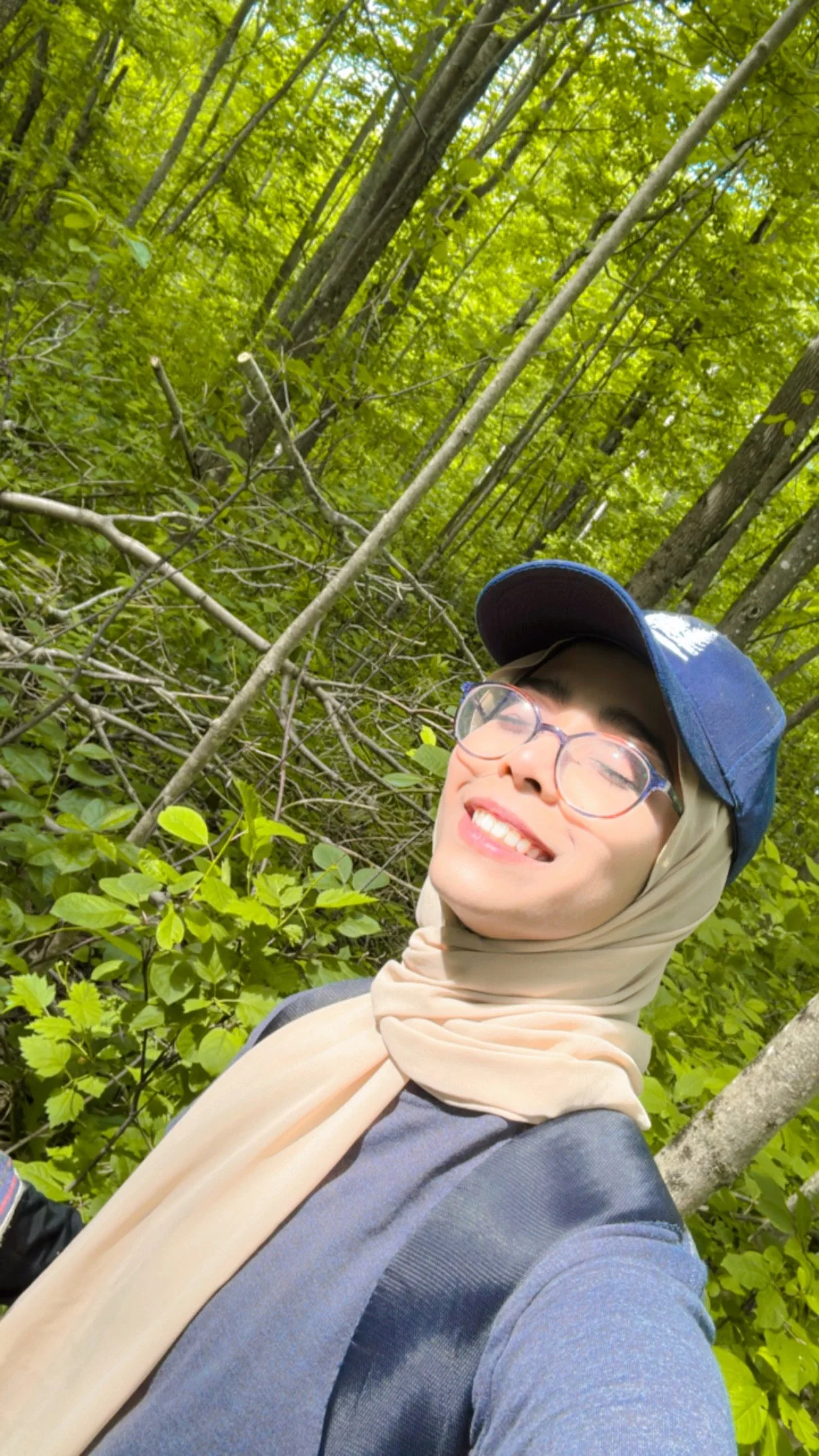
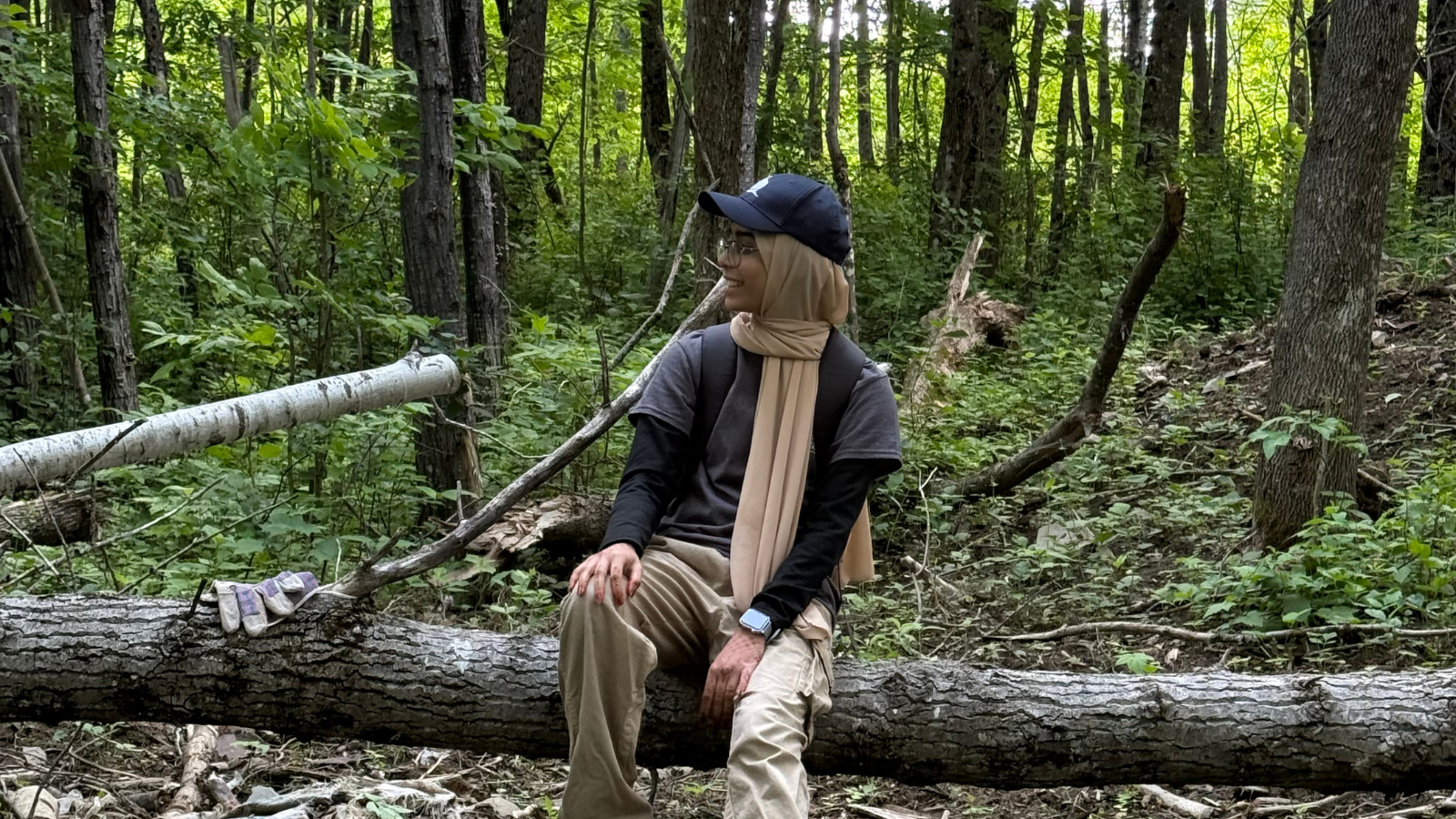
In paying attention to trees, I found attention for myself. (Credit: Suzanne Shah/Nature Trust of New Brunswick)
Value lived in tiny things—the simple imagination of the natural world. Nature gave me room to slow down, to step away from the thousand thoughts that filled my mind. It taught me to pay attention differently: to the way a branch leans into wind, to the shape of shade on the ground, to the air moving in and out of my lungs. That attention helped me notice myself—how I was thinking, changing, opening. It made space to reflect, to understand the love of the people in my life, and to see how many moments I had been rushing past.
Every time I walk now—every step on a trail, every leaf lifting in a breeze—I try to give it my attention. That kind of attention builds quietly. It feels like a steady conversation with the world, a way of listening without asking for answers. In that calm, I could feel the beauty of a world shaped by our Creator—not through grand moments, but through subtle ones most people walk past without seeing.
I didn’t leave the summer with conclusions or certainty.
I left with a kind of love—steady, gentle, and without demand.
A love that exists simply because it exists. The kind that doesn’t hurry. I found that feeling through falling in love with small, quiet things—and in learning to see them clearly, I learned something about seeing myself.
What stays with me now isn’t urgency. It is the stillness of attention—a patient kind of love, steady as wind moving through trees.
Suzanne Shah interned with the Nature Trust of New Brunswick in the summer of 2025. Read her feature story about the 10th anniversary of our Great Fundy Coastal Cleanup.