Sowing Seeds of Hope
Sowing Seeds of Hope
How the Nature Trust’s seed collection project is safeguarding endangered trees for future generations
WRITTEN BY AMELIA VAN WART
Published June 25, 2026
As we scan the canopy of Sasokatokuk Nature Preserve in Carleton County, hundreds of featherlike, tiny bunches of white seed float around us. These fuzzy bundles belong to trees of the Populus genus, primarily the poplar tree. This patch of Appalachian Hardwood Forest is a particularly productive site for poplar, along with black ash (Fraxinus nigra), basswood (Tilia americana) and willow trees (including Salix bebbiana and Salix nigra)—and that’s exactly why we’re here.
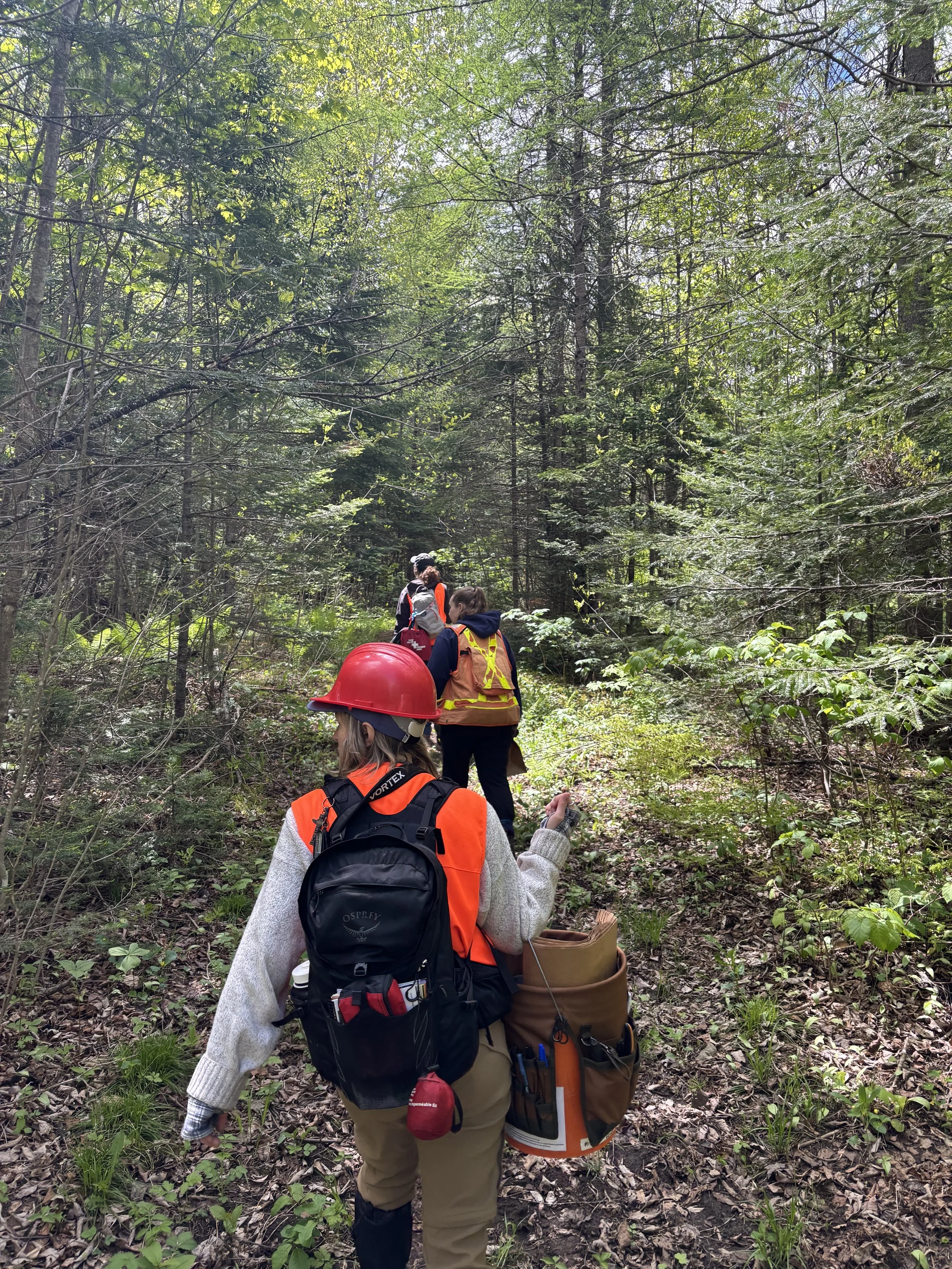
Staff from the Nature Trust of New Brunswick’s stewardship team walks alongside Darren Derbowka from the National Tree Seed Centre (NTSC), squinting as we determine which trees have produced viable seed.
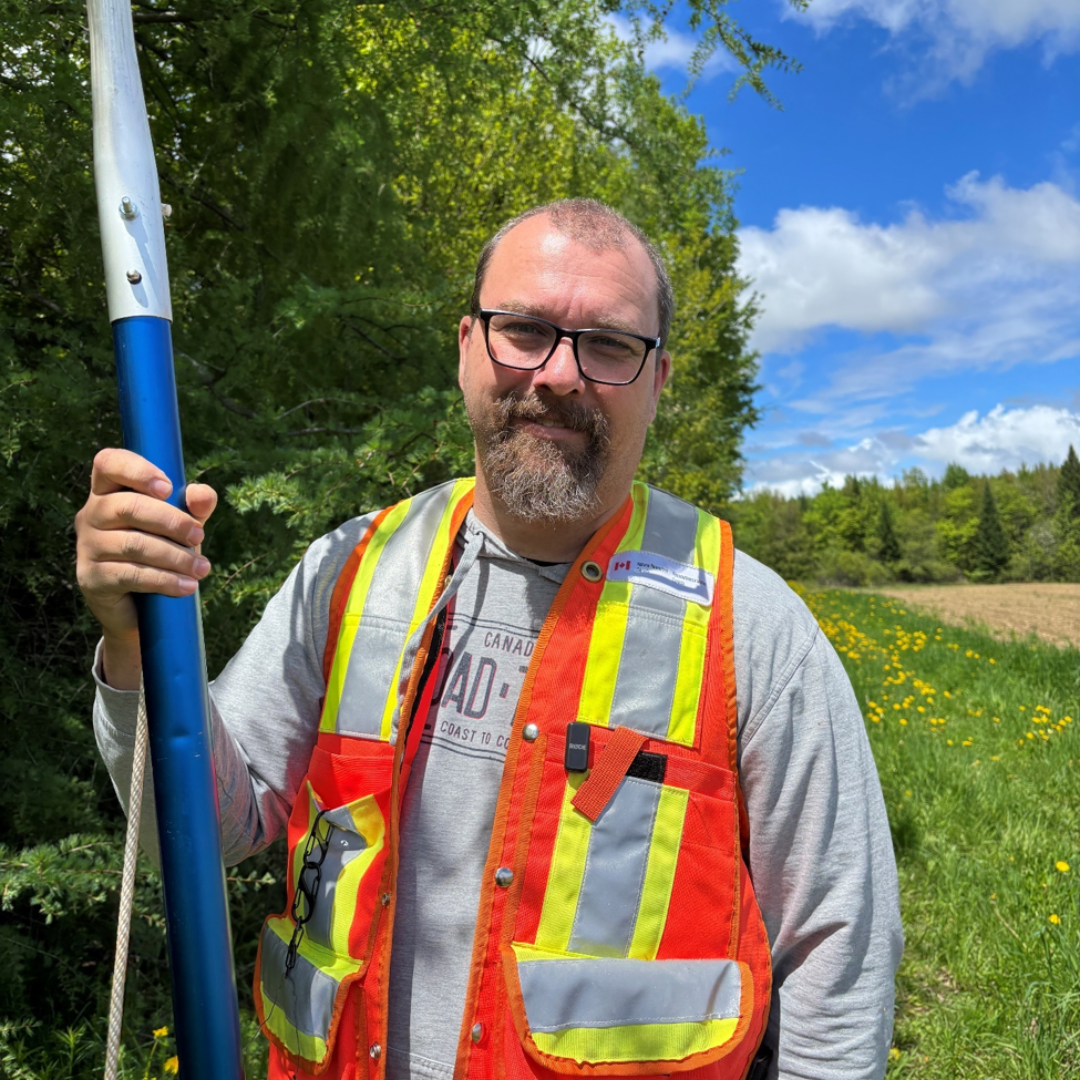
Darren Derbowka, Coordinator at the National Tree Seed Centre.
New Brunswick is home to over 30 native trees that form the foundation of our forests, floodplains and riparian habitats. But critical species like black ash, white ash (Fraxinus americana), butternut (Juglans cinerea), Eastern hemlock (Tsuga canadensis) and bur oak (Quercus macrocarpa) are declining under pressure from invasive species, disease, and climate stressors.
At the same time, restoration efforts face another challenge: access to locally adapted native seed.
That’s what brought the Nature Trust of New Brunswick and the National Tree Seed Centre together this year through a native seed collection project designed to preserve regional biodiversity and promote resilient forests.
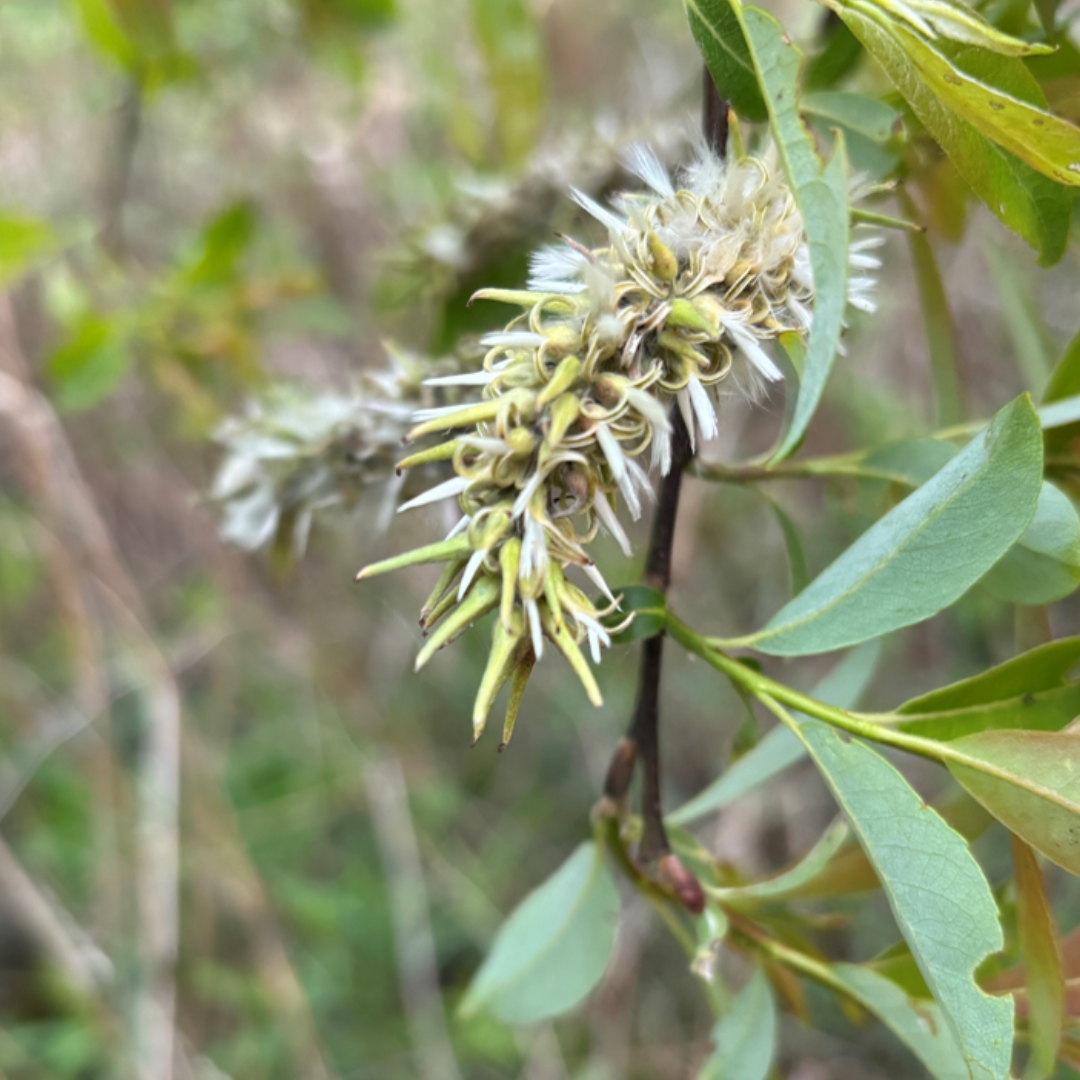
Bebb’s Willow (Salix bebbiana) seed.
“When I reflect on the conservation mandates of many different organizations across the country, I think that no single organization can accomplish those conservation goals on its own,” says Derbowka, coordinator with the NTSC in Fredericton.
“The significance of [this partnership with the Nature Trust] is that we’re working together and mutually achieving these goals of protecting the genetic diversity of forests in New Brunswick as well as across the country.”
The NTSC, Canada’s only national seed bank and part of Natural Resources Canada, plays a key role in preserving native seed and maintaining genetic diversity in our forests. By collecting and storing viable seed now, the centre creates future opportunities for restoration, research, and long-term conservation.
But seed collection isn’t just a walk in the woods.
Many tree species only produce viable seed within a highly limited time frame. For Populus (poplar, aspen and cottonwood) and Salix (willow) varieties, opportunities can last anywhere from a couple days to two weeks.
And as we move deeper into Sasokatokuk Nature Preserve (pronounced sa-sa-ka-te-kok, meaning ‘straight river’ in Wolastoqey) we realize we’re too late. The poplar seed has already flown from the tree’s branches at this site and can't be collected. Just days earlier, we’d had good luck collecting from this genus at Pickerel Pond Nature Preserve.
But hope springs—or seeds—eternal. We come across an abundance of seeding Bebb’s willow (Salix bebbiana) and set to work, tracing each branch back to the trunk to determine which seeds belong to which tree—and making sure to not disturb resting ladybugs in the process.
As the afternoon sun reaches its peak, we count out approximately 19 litres of seed capsules, which amounts to millions of individual seeds which can be extracted, dried, and stored at the NTSC.
This outing marked our fifth field day with the NTSC. Our team has collected mostly trembling aspen and Bebb’s willow seeds across eight nature preserves to date. These aren’t priority seeds for the project, but they’re species which seed in the spring, and they provided the perfect training opportunity for our team to learn the ropes before priority species, such as black ash, butternut and bur oak, go to seed in the fall.
One thing we learned in a hurry: seed collection is surprisingly technical work.
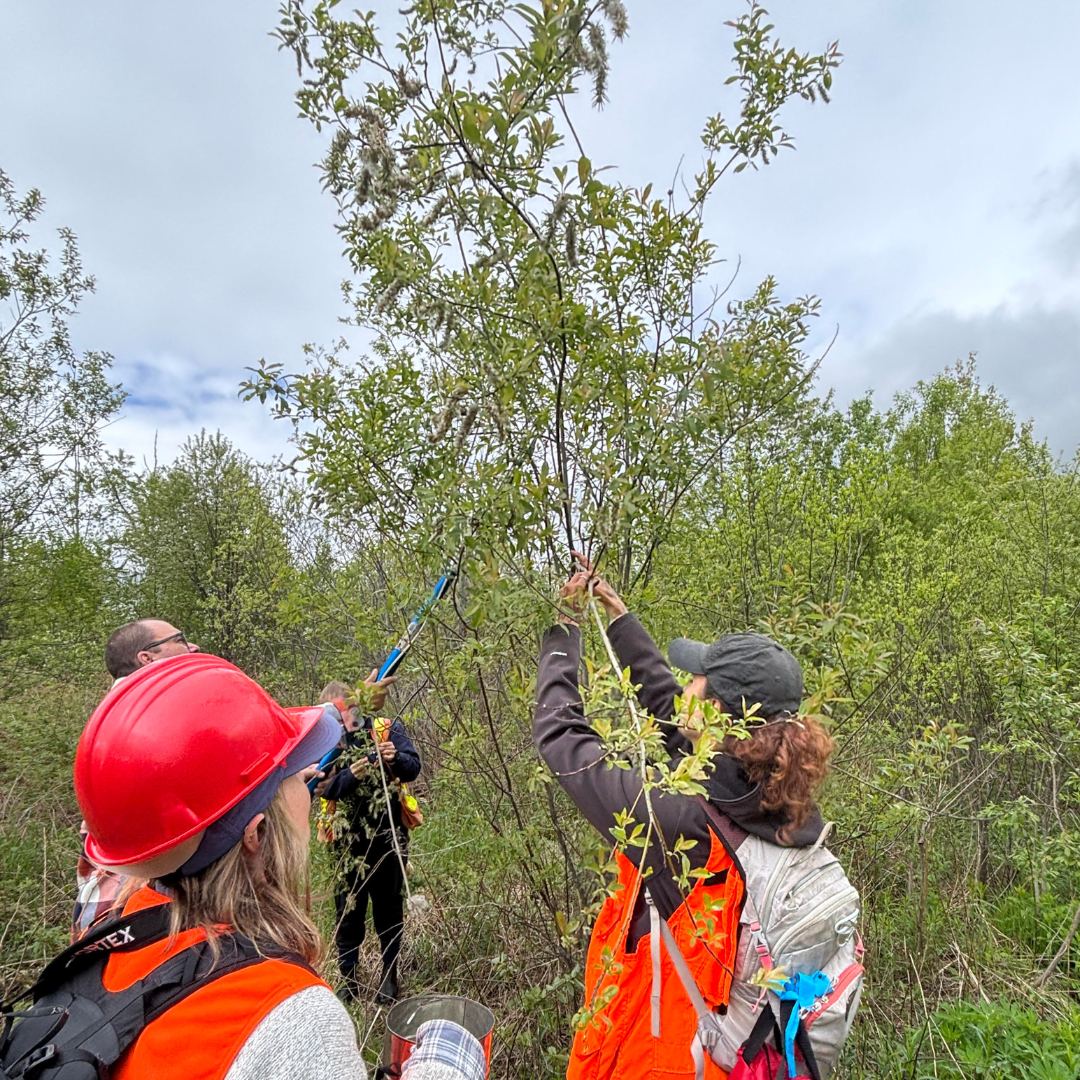
Our stewardship team collecting seed with members of the NTSC.
It’s time intensive and requires an awareness of which species produce seed at a given time, where to find healthy and genetically representative populations, access to those sites at the right time, and how to handle and store seed properly once collected.
“The difficulties in seed collection are that we live in such a vast country, it’s difficult for us to get to all of these places at the right time,” Derbowka says. “It’s one of the reasons that threatened species are in peril, because some of them, like black ash, only go into seed every six to nine years. So the opportunities to collect the seed and execute conservation are very small to begin with.”
That challenge makes the predicted 2026 ash mast year especially important.
Mast years are a phenomenon wherein perennial species produce unusually large seed crops. For black ash—already under intense pressure from the emerald ash borer insect—this represents a crucial and rare opportunity to collect viable seed from healthy trees before widespread mortality occurs.
If successful, seed we collect this fall could become a long-term conservation resource. Seed from a single healthy ash tree can support hectare-scale restoration efforts. Preserving this genetic material now creates opportunities for future riparian and forest rehabilitation and supports ecosystems to become more resilient to rising temperatures, invasive species, and habitat loss.
Black ash, also an especially significant tree for New Brunswick’s Indigenous communities, is just one example.
“In Canada, there are 234 different species of trees,” Derbowka says. “Fifty-seven are currently listed either federally, provincially, or globally as a threatened species. That’s roughly 25% of all of Canada’s tree species that are threatened in some way.”
In New Brunswick, butternut and hemlock populations are also under increasing pressure, respectively, from butternut canker, an infection caused by a pathogenic fungus, and hemlock woolly adelgid, an invasive insect which feeds upon hemlock and spruce.
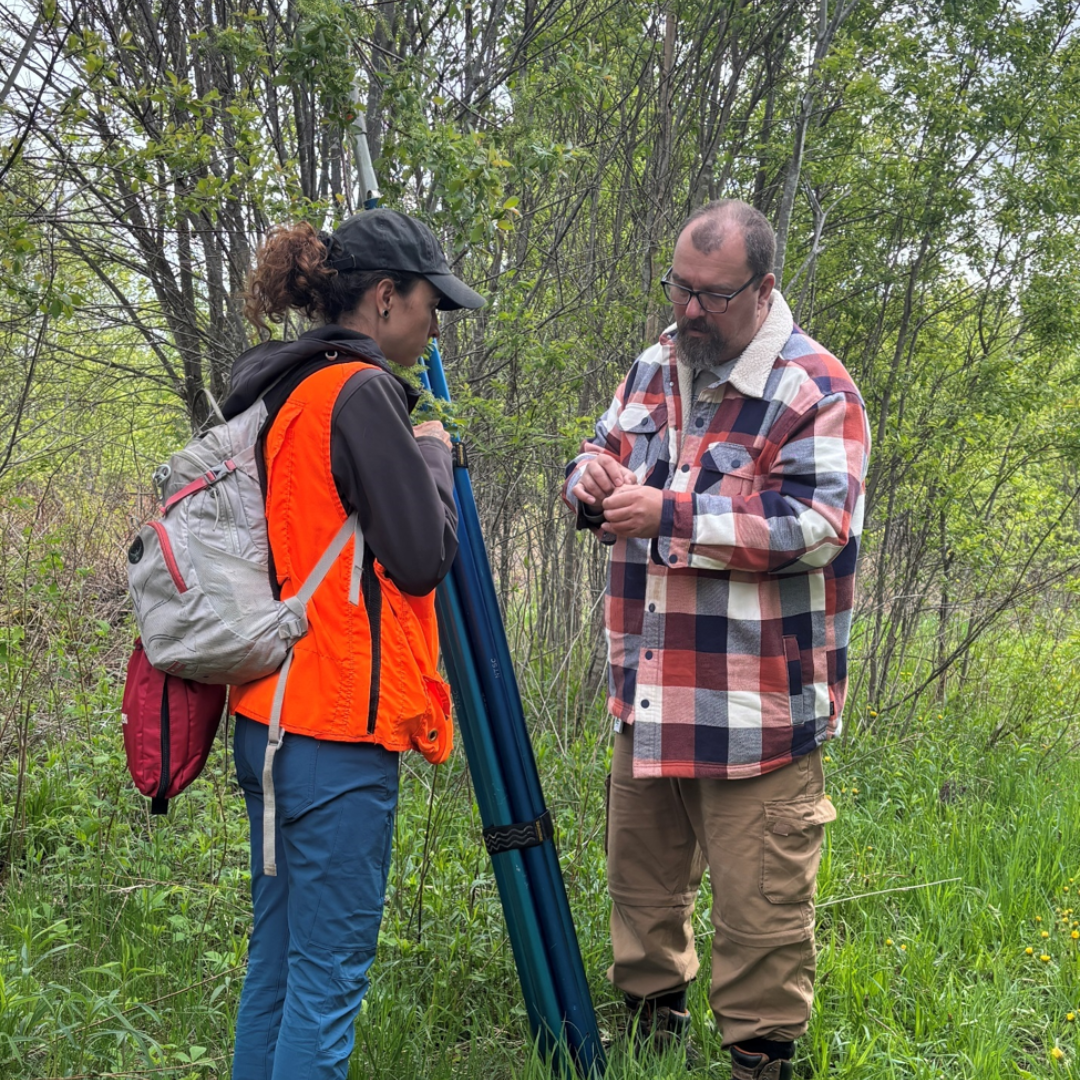
Courtney Le Roux, stewardship manager with the Nature Trust of New Brunswick (left) and Darren Derbowka (right) collecting Bebb’s Willow seed at Sasokatokuk Nature Preserve.
Proximity to people, in a sense, is another obstacle to restoring these species. What we plant in our backyards and along city streets matters more than you might think.
“In our cityscapes, we tend to be planting non-native species,” Derbowka says. “As ornamentals hybridize with native species ... that breaking up of gene flow, all of that has impact on genetic diversity.”
That’s another reason the NTSC is excited about this partnership with the Nature Trust.
“Everyone is desperate for seed, but nobody has anywhere to collect it,” says Courtney le Roux, the Nature Trust’s Stewardship Manager. “That’s a gap the Nature Trust can fill. Our preserves provide continuous access to healthy native tree populations, and we can collect seed that can be preserved by the NTSC and distributed for restoration and research.”
With 100 nature preserves across multiple ecoregions in New Brunswick—and tools such drone-supported and on-the-ground reconnaissance, advanced mapping techniques, and ethical seed collection protocols—our team, project partners and volunteers can identify productive trees, verify mast conditions, and coordinate efficient and effective seed collection.
“This relationship we’re building with the Nature Trust is really building opportunities to collect species that become very difficult to obtain seed from as populations diminish,” Derbowka says.
“I’m hoping that the work we’re doing here stimulates interest in working with other organizations, not just in New Brunswick but around the Maritimes and across the country, doing significant conservation work like this.”
What can you do to support our Native Seed Collection Project? Learn more about seed collection and planting native species with our seed collection recipe cards, outlining how and when to collect, store and germinate seeds from 14 native trees and shrubs. You can get out in the field with us by signing up to volunteer—this summer we’ll be removing invasive species from our nature preserves, planting native species in their place, maintaining hiking trails, and more across our network of 100 nature preserves. Or, consider donating to support our work protecting the places New Brunswickers love.
We gratefully acknowledge the support of Wildlife Habitat Canada, WWF-Canada, the New Brunswick Wildlife Trust Fund, and the McLean Foundation in helping to make this project possible.